
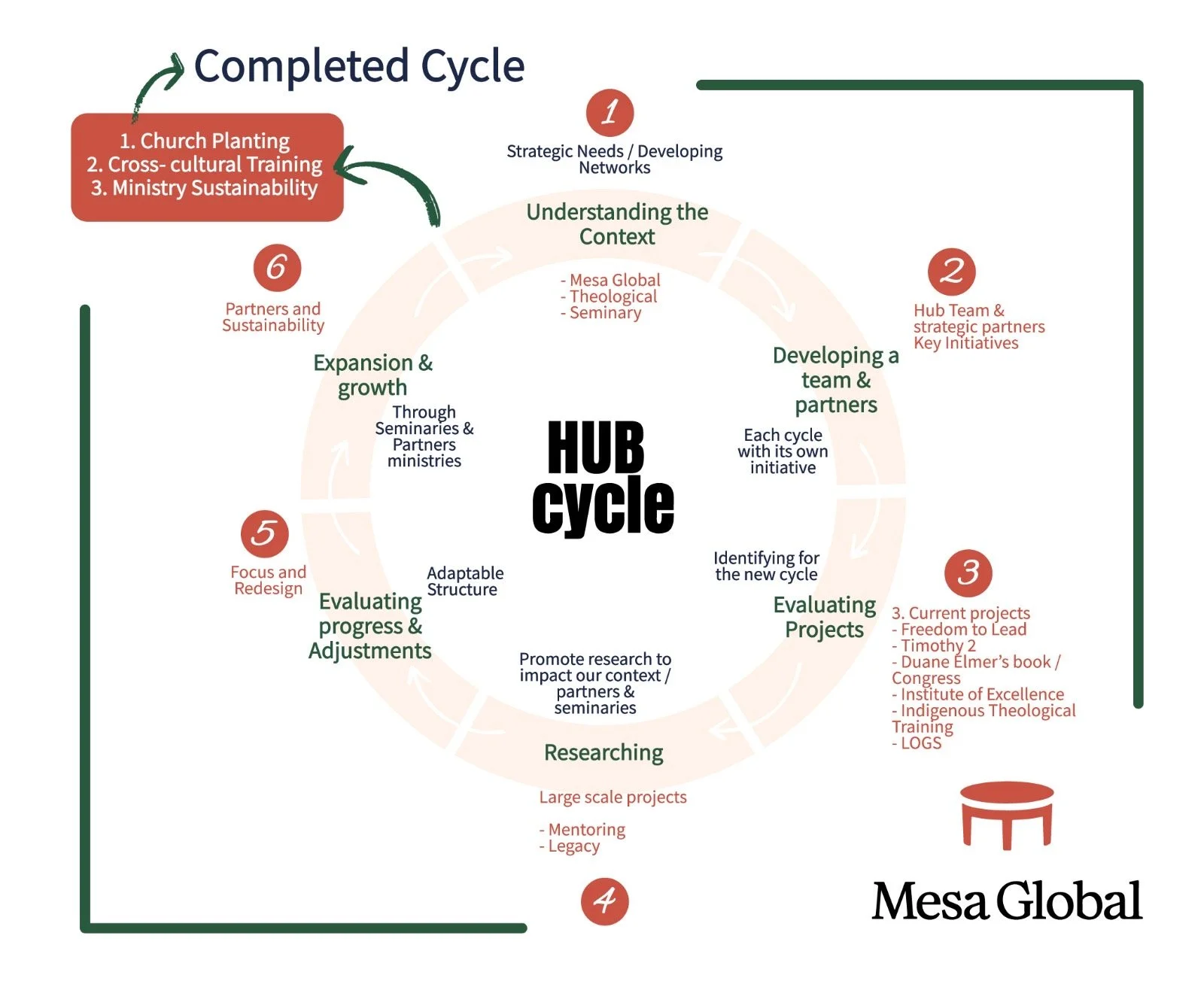
If you’ve been following our ministry for the past few years, you’ve probably heard us talk about Regional Training Hubs—but you may still wonder what they are, how they function, and why they matter. As we look back on 2025, this initiative has become one of the clearest expressions of God’s provision, creativity, and global impact.
Regional Training Hubs are collaborative networks that seek to catalyze effective, holistic training of pastors and leaders through fostering partnerships among churches, pastors, missionaries, trainers, seminaries, denominations, and their leaders.
The State of the Regional Training Hubs in 2025
How God is strengthening leaders and shaping a global network of training and discipleship
At their core, Regional Training Hubs (RTHs) are locally-led collaborative networks. Each hub brings together pastors, teachers, counselors, seminary faculty, and ministry practitioners who are committed to equipping the church in their own context. These networks help leaders grow in biblical literacy, practical theology, and the skills needed to serve their communities faithfully.
Because RTHs are locally-led, they are not dependent on outside experts. Because they are collaborative networks, they multiply training and resources far beyond what any single organization could accomplish on its own. And because they are rooted in local ownership, they grow sustainably and adapt to the realities of their region.
This past year has brought major progress across all five active hubs, while also laying groundwork for two emerging regions. We have also refined the way we work, clarified our strategic model, and strengthened the research foundations that guide each hub.
Here is where things stand today.
5 Active Regional Training Hubs
1. Latin America — Medellín, Colombia
Our Latin America hub in Medellín continues to grow into a central gathering point for Spanish-speaking leaders. Through this locally-led collaborative network, churches and leaders across the region are building capacity together, sharing resources, and pursuing theological formation at greater depth.
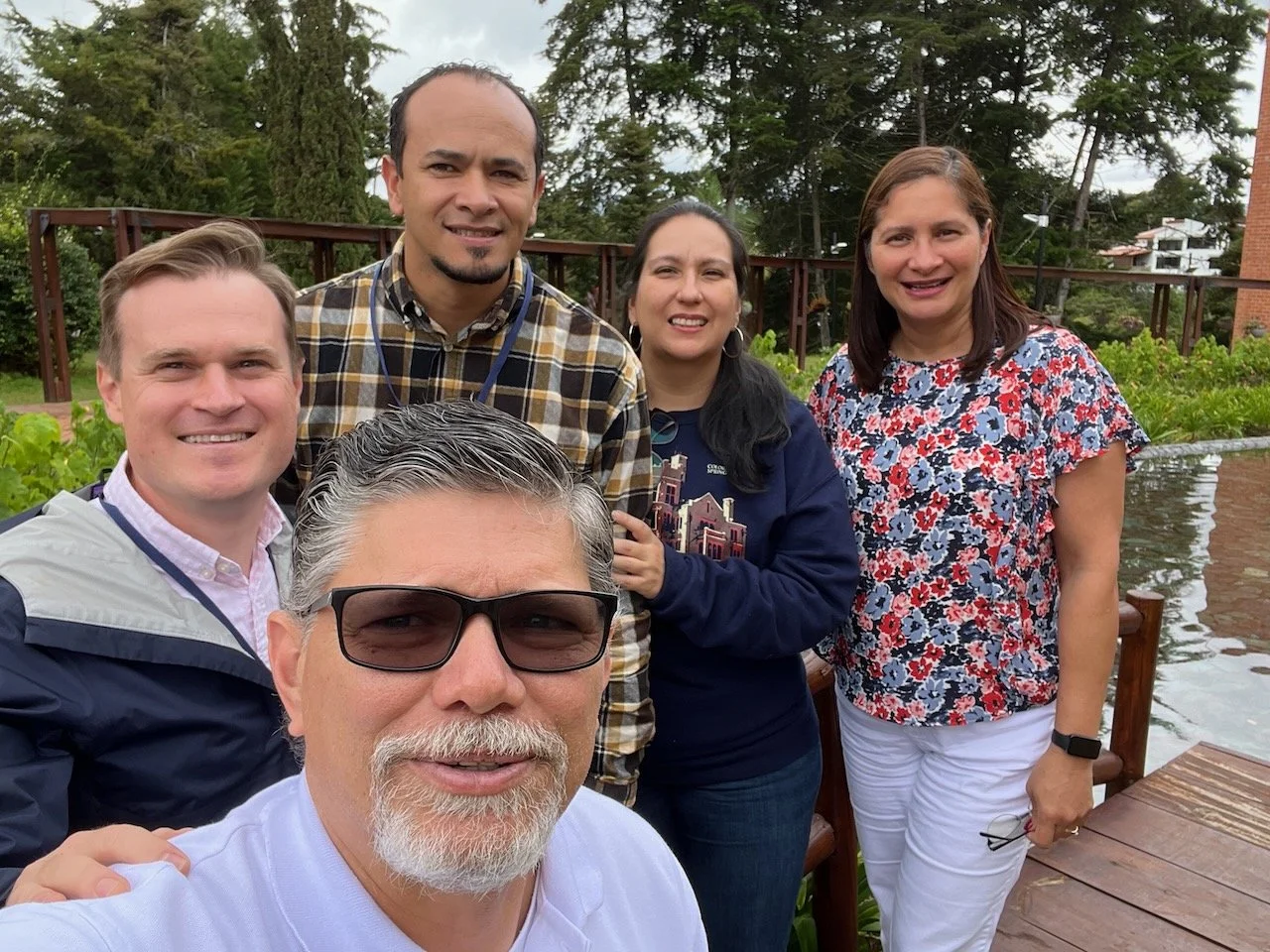
Some of the LATAM RTH leadership team in Colombia with Jack in 2023
2. Francophone Africa — Dakar, Senegal
The Dakar hub is a rapidly expanding collaborative network of French-speaking African leaders who are eager for training that speaks to their cultures, languages, and ministry challenges. This region continues to experience strong momentum and new partnerships.

Matt Boyd and his team coined the 7 C’s of hub activity (see below). They are actively training leaders on mentoring, sustainability, and biblical foundations.
3. Anglophone Africa — Nairobi, Kenya
From Nairobi, leaders in East and South Africa are collaborating across denominations, church networks, seminaries, and trauma-informed ministries. This network is maturing into a strong regional ecosystem for training and pastoral care. The video below gives an update on a 2024 consultation on training men and women in theological education.

Some of our Africa hub leaders in Albania earlier this year.
4. South Asia — India
The Bangalore hub represents a complex and diverse collaborative network spanning India, Nepal, Sri Lanka, Bangladesh, Myanmar, and beyond. Diversity is a challenge here—but also a strength—as leaders learn from one another and shape context-sensitive training pathways. Read more here.
5. Eastern Europe — Ukraine
The Lviv hub emerged during wartime and has become a network committed to pastoral resilience and trauma-informed care. Even as the region suffers, leaders are walking together, learning together, and supporting churches under extraordinary pressure.
Jack spent some good time with our Ukrainian hub team when he traveled to Albania in March 2025. Despite horrific bombardments and very challenging economics, our Ukranian brothers and sisters continue to train pastors and chaplains while facilitating care for internally displaced peoples and providing pastoral care.
At a conference in Boston this November, Jack celebrated with some partners the publications of two key volumes from the Ukrainian context on strengthening churches in the context of war.
Emerging Regions
Two additional regions show signs of becoming future collaborative networks:
MENA (Middle East & North Africa) — Relationships are forming, and we are seeking local leaders who can convene a network grounded in cultural sensitivity and long-term trust.
Southeast Asia — Connections are growing, and we are taking time to listen, discern, and identify the leaders who could anchor a sustainable hub.
We move slowly and prayerfully because we want these networks to reflect local leadership, local wisdom, and local ownership, not outside direction.
Strengthening the Foundation: Strategy, Metrics & Research
In 2024, we clarified our logic model, refined our metrics, and strengthened the internal frameworks that support each RTH. This behind-the-scenes work helps ensure that every collaborative network has:
Clear outcomes
Measurable indicators
A shared understanding of what sustainable ministry formation looks like
Support that amplifies local leadership rather than overshadowing it
We also began regional research projects to understand contextual needs, gaps in existing training ecosystems, and opportunities for collaboration. This research ensures that each network offers training that is deeply aligned with its local realities.
How We Work: The Seven “C-Steps” Guiding Every Hub
As our strategy has matured, we’ve identified seven key actions that shape the work of every Regional Training Hub. These steps create a consistent rhythm across regions while leaving room for each network to grow in its own way.
1. Convene Partners
We gather churches, seminaries, NGOs, and local leaders who share a vision for strengthening the church.
2. Connect Contributors
We link people with complementary skills—teachers, counselors, translators, researchers—so the network grows through shared gifts.
3. Catalyze Projects
We launch training initiatives, mentoring programs, research efforts, and curriculum projects led by local leaders.
4. Coordinate Activities
We align trainings and partnerships with long-term goals, ensuring efforts reinforce rather than duplicate one another.
5. Collaborate Effectively
We work alongside network leaders with humility and trust, contributing without controlling.
6. Celebrate God’s Work
We highlight stories of transformation and growth because God deserves the glory for every outcome.
7. Critique What Is Working
We regularly evaluate our methods and outcomes so the networks can continue learning and improving.
Together, these steps shape how RTHs grow as locally-led collaborative networks that serve the global church.
God’s Provision
One theme has defined the year:
God keeps providing the right people at the right time.
Across every region, He has brought partners—pastors, educators, practitioners, translators, trauma-care leaders, and ministry networks—who share a vision for a flourishing, well-equipped church. These partners carry the work with us, advancing the mission in ways only local leaders can.
We are deeply grateful for every one of them.
Please join us in praying for God to bring more leaders for us to equip and empower.
Looking Ahead to 2026
As we step into 2026, the Regional Training Hub initiative is gaining clarity, depth, and momentum. The collaborative networks are strengthening, leaders are multiplying, relationships are deepening, and new opportunities are opening.
Thank you for praying, supporting, giving, and walking with us. Your partnership makes it possible for these locally-led networks to grow—and for the global church to be strengthened through them.